
Gardening in November is not just a list of jobs. From a garden designer’s perspective, it is a chance to look at how plants, soil, light, colour and wildlife work together in a real UK garden.
The best planting decisions come from matching the plant to the environment. A border with heavy clay, a dry new-build plot, a shaded courtyard and an open windy garden all need different answers. Good design is not about forcing a favourite plant into the wrong place; it is about choosing plants that can grow well, look right and support the life of the garden.
What to notice in November
This month, focus on bare-root planting, shelter and the bones of the garden. Stand back from the border before making changes. Notice where the garden has depth, where it looks flat, where colour feels balanced and where plants are fighting the conditions.
Planting for the right soil and aspect
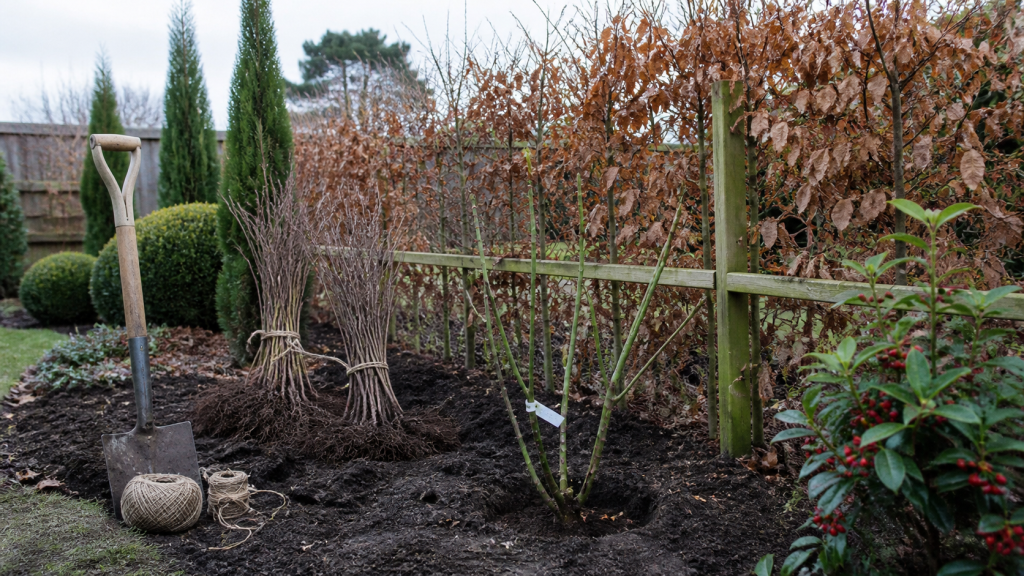
Bare-root planting is economical and effective when soil is moist but not waterlogged. Firm plants carefully and avoid planting into compacted ground.
Useful plants to consider at this time of year include bare-root hedging, roses, fruit bushes, trees, yew, hornbeam, beech, hawthorn and winter-flowering shrubs. The exact choices should depend on your garden’s soil, aspect, drainage, exposure and the amount of maintenance you realistically want to do.
Using depth, colour and repetition
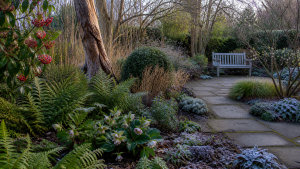
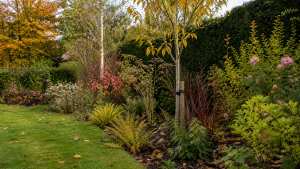
A strong border usually has layers. Low plants cover the ground and soften edges. Middle-height perennials carry seasonal colour. Taller shrubs, grasses, climbers or small trees give the eye something to travel towards. Repetition helps the garden feel intentional rather than busy.
Colour works best when it is connected to the site. In a hot, sunny border, silvers, blues, purples and soft yellows can feel calm and drought-aware. In shade, pale flowers, fresh greens, ferns and glossy foliage can lift the space. The aim is not to use every colour available, but to create a rhythm that suits the house, the season and the setting.
Leaving space for wildlife
Native hedging, berries and undisturbed corners give the garden winter value. Wildlife-friendly design is often about what you choose not to remove.
A wildlife-friendly garden does not have to look neglected. It needs food, water, cover and a little tolerance. Open flowers, seedheads, varied heights, hedges, ponds, log piles, compost areas and quieter corners can all sit comfortably within a well-designed garden.
A garden designer’s November checklist
- Check whether struggling plants are in the wrong soil or aspect.
- Look for gaps in height: ground layer, middle layer and structure.
- Choose plants for long-term suitability, not only for immediate colour.
- Repeat key plants or colours so the border feels coherent.
- Leave some space for wildlife, movement and seasonal change.
- Plan before buying, especially if the garden feels expensive or uncertain.
A few extra design checks before you act
Before making seasonal changes, look at the garden as a whole rather than one border at a time. The best UK planting advice considers soil, light, shelter, colour, maintenance and wildlife together.
- Check whether the plant suits the soil before buying more of it.
- Repeat successful plants to create rhythm and reduce visual clutter.
- Leave breathing space so shrubs, grasses and perennials can mature naturally.
- Keep a mix of flowers, seedheads, shelter and water for wildlife.
This designer’s perspective helps the garden feel more intentional, more resilient and easier to enjoy through the seasons.
Need help applying this to your own garden? Tony Harding offers garden consultations, garden coaching, garden health checks and wildlife-friendly garden advice. You can also book a garden conversation.
Need advice for your own garden? Tony can help with garden consultations, planting advice, garden coaching, remote advice and garden health checks across Leicestershire, Warwickshire, Northamptonshire and nearby Midlands areas.